Cast iron
Iron-carbon alloy with >2% carbon, valued for castability.
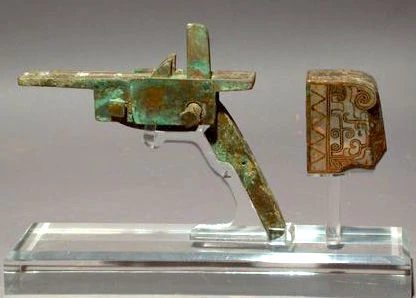
Cast iron is a class of iron–carbon alloys with a carbon content of more than 2% and silicon content around 1–3%. Its usefulness derives from its relatively low melting temperature, good fluidity, castability, excellent machinability, and wear resistance, making it an engineering material with wide applications in pipes, machines, and automotive parts. The earliest cast-iron artifacts date to the 8th century BC in what is now Jiangsu, China, and it was used in ancient China for weaponry, agriculture, and architecture.
- field
- Metallurgy, Engineering
- known_for
- Low melting point, castability, use in pipes, engines, and bridges
- earliest_artifacts
- 8th century BC, Jiangsu, China
- first_cast_iron_bridge
- 1770s, Iron Bridge, Shropshire, England
Lore & Background
Cast iron is made from pig iron, the product of melting iron ore in a blast furnace. It can be produced directly from molten pig iron or by re-melting pig iron with iron, steel, limestone, and coke, while removing contaminants like phosphorus and sulfur. Carbon and silicon content are adjusted to desired levels, and other elements may be added before casting. Modern melting often uses electric induction or arc furnaces, though cupola furnaces are also used.
The alloying elements determine the form of carbon: white cast iron has carbon combined into cementite, making it hard but brittle; grey cast iron has graphite flakes that deflect cracks; ductile cast iron has spherical graphite nodules that stop crack progression. Silicon forces carbon out of solution, promoting graphite, while manganese, chromium, and other elements promote carbide formation. Nickel and copper improve strength and machinability without changing graphite amount.
Cast iron was used for cannons and shot in 15th-century Burgundy, France, and in England during the Reformation. The first cast-iron bridge was built in the 1770s by Abraham Darby III in Shropshire, England. Cast iron was also used in building construction.
Reader's Guide
Cast iron's significance lies in its combination of low melting point, good fluidity, castability, machinability, and wear resistance, making it a foundational engineering material. Its applications range from pipes and automotive cylinder heads to gearbox cases and wear surfaces in slurry pumps and grinding mills. The ability to adjust properties through alloying—producing white, grey, or ductile iron—allows tailored performance for different uses. Historically, cast iron enabled mass production of weaponry in ancient China and later supported the Industrial Revolution through cannons, bridges, and building construction. Its legacy includes the Iron Bridge, a landmark of engineering. However, cast iron is notoriously difficult to weld and tends to be brittle except for malleable varieties. The material's tribological behavior, influenced by microstructure, affects wear resistance in sliding contacts. Despite competition from steel and other alloys, cast iron remains widely used due to its cost-effectiveness and versatile properties.
Did You Know?
- The earliest cast-iron artifacts date to the 8th century BC in what is now Jiangsu, China.
- Cast iron was used for cannons and shot in 15th-century Burgundy, France, and in England during the Reformation.
- The first cast-iron bridge, the Iron Bridge, was built in the 1770s by Abraham Darby III in Shropshire, England.
- Cast iron is notoriously difficult to weld.
More in Chinese inventions 1-24
Spotted an error? Know more?
This is a living reference — every entry is fact-audited, and reader corrections feed straight into our audit queue. Suggest an edit · See this site's audit record